DJI had to kibosh its usual big unveil this time out, for obvious reasons, but the company won’t let a little thing like a global pandemic get in the way of an announcement. A little over two years after unveiling its lightweight Mavic Air, the drone giant is announcing the sequel.
When I reviewed the original shortly after the announcement, most of my complaints centered around the product’s usefulness. True, it was an impressive bit of engineering, but that only gets you so far. This time out, DJI looks to have addressed at least some of those issues. Among them, improved battery capacity.
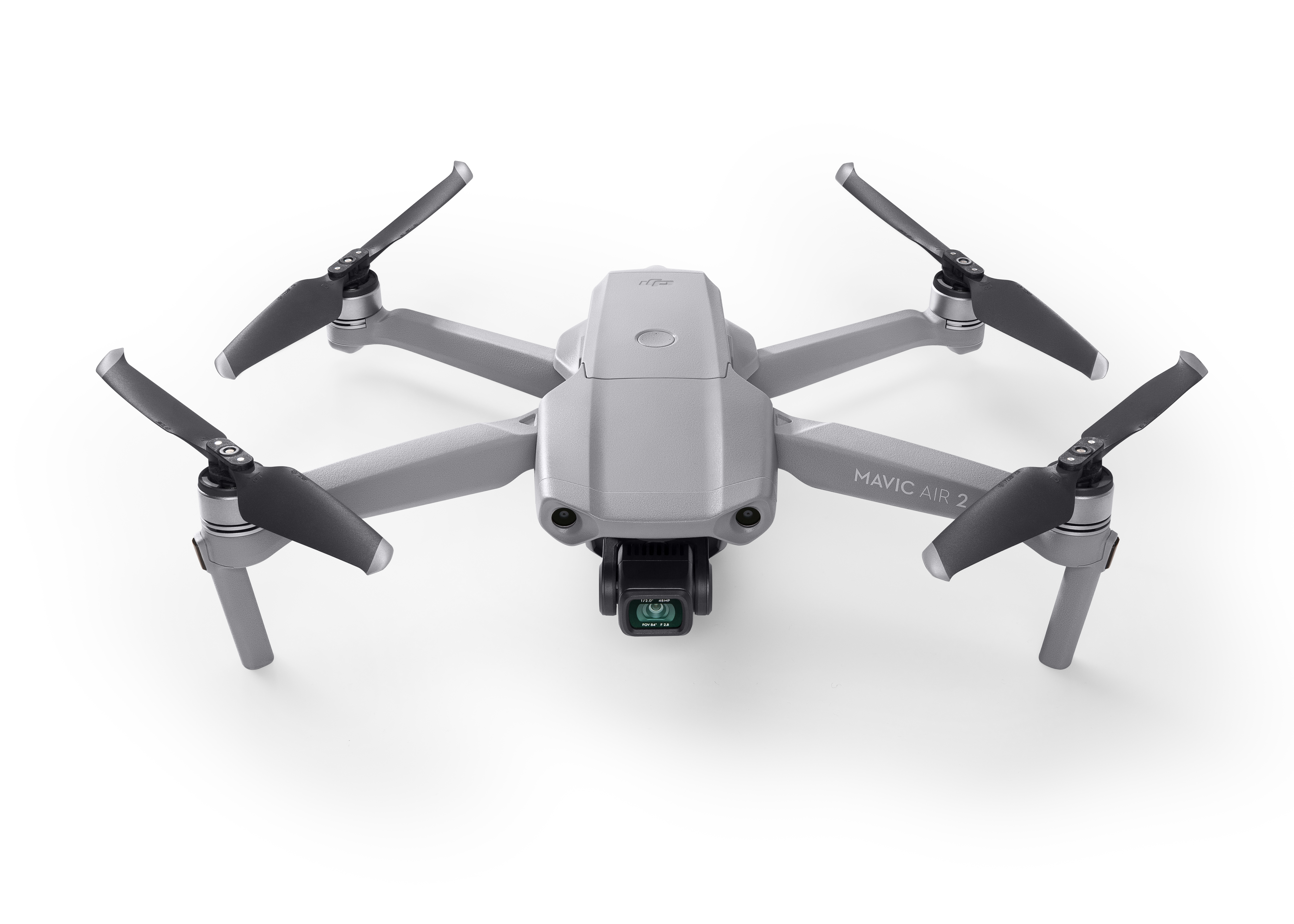
The original’s 21 minutes of life was among my key frustrations with the product. The company says the drone should be able to get up to 34 minutes on a charge. We’re taking a system for a spin and will keep you updated on how that translates into real life.
I found a handful of usability errors the first time out, as well. There are, thankfully, some upgrades on the software front, including, most notable, a new version of ActiveTrack. The feature is said to have improved subject tracking on board, including the ability to relocate an something temporarily obscured by an object, like a tree. The Point of Interest and Spotlight features have gotten upgrades, as well.
Imaging is, once again, the thing here. As such, the biggest updates are on the picture and video front. The new Air is able to shoot 4K video at 60 frames a second. Stills can be shot at up to 49 megapixels, while the three-axis gimbal should help alleviate some of the drone’s shaking. The system can also do 8x slow motion and shoot photos and video in HDR. There are new low-light settings and scene recognition features, as well.

Other on board improvements include improved wireless transmission and upgraded obstacle avoidance. The latter is particularly useful for novice fliers, but is a welcome addition for any level.
The Mavic Air 2 is available today in China. Worldwide shipping (including the U.S.) has been significantly complicated by the COVID-19 crisis. Pre-orders are open today and it’s “expected” to ship in mid-May. DJI understandably doesn’t seem especially certain at this point. The system starts at $799. There’s also a $988 version that includes a charging hub, three batteries and a carrying case.
[gallery ids="1979864,1979865,1979866,1979867,1979868,1979869,1979870,1979871,1979872,1979873,1979874,1979875,1979876,1979877,1979878"]


from TechCrunch https://tcrn.ch/2YaiovO
Comments
Post a Comment